
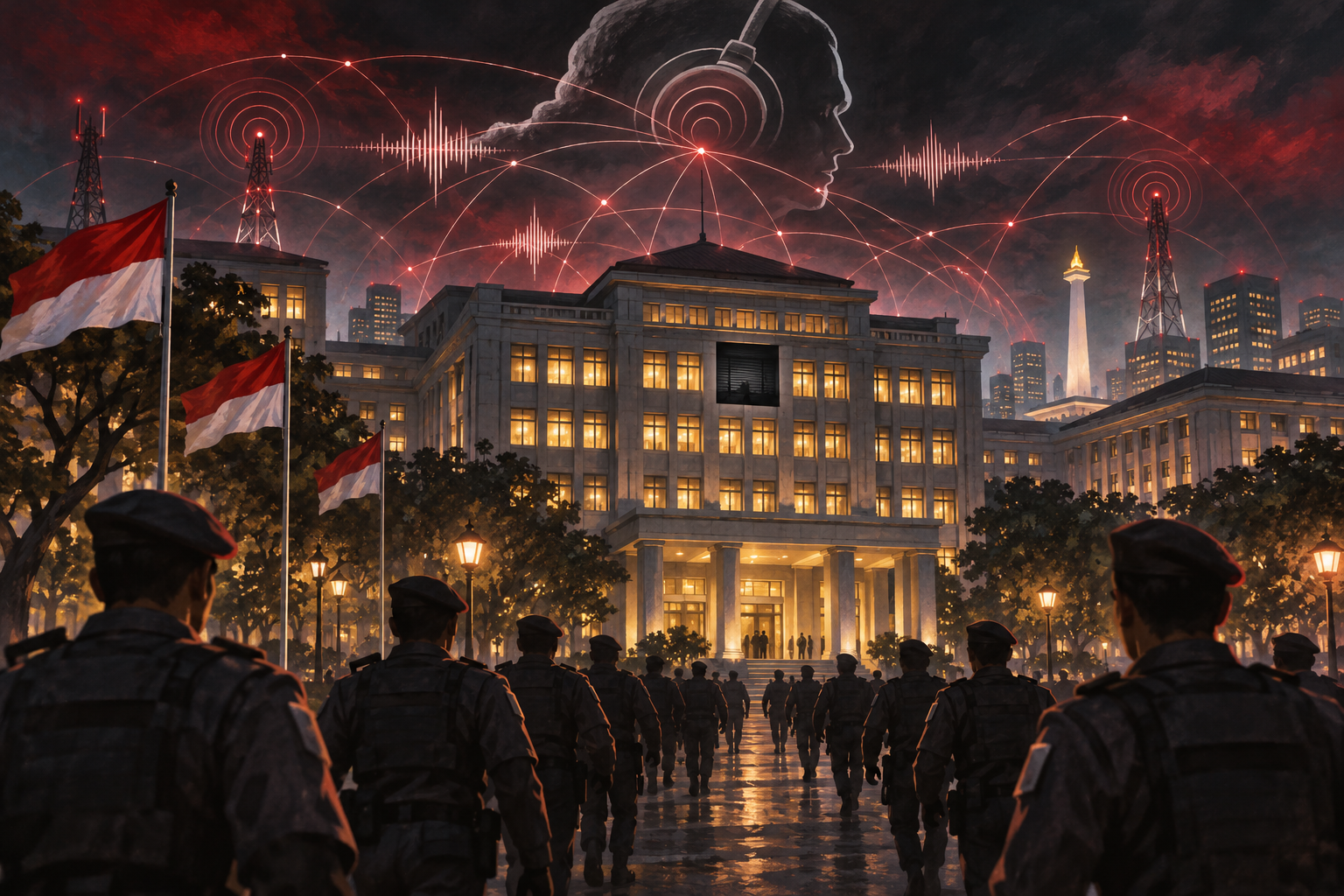
JAKARTA, Indonesia - Indonesia's military is deploying more than 20,000 personnel to Jakarta as authorities investigate an alleged illegal wiretapping operation that targeted President Prabowo Subianto and a wide circle of government and civil society figures.
The case has led to the detention of three senior police generals, including Gen. Listyo Sigit Prabowo, who served as national police chief before becoming the president's chief of staff last month. President Prabowo dismissed Listyo from that post on Wednesday.
Police identified the other suspects as Ahrie Sonta Nasution, head of the National Police Legal Division, and Eko Hadi Santoso, a senior instructor at the force's education and training institute. The three men have not publicly responded to the allegations.
Investigators accuse the suspects of illegally intercepting communications, accessing electronic systems without authorization and ordering the deletion of files containing intercepted material. Police say the alleged surveillance ran during 2025 and 2026, when Listyo headed the national police, and was conducted without the procedures required for a lawful investigation.
The alleged targets extended far beyond the president. Authorities said ministers, politicians, journalists, business executives, civil society leaders and nongovernmental organizations may also have been monitored. The motive and any ultimate recipient of the information remain unknown.
Officials have used unusually grave language. Presidential spokesperson Prasetyo Hadi said the conduct, if established, could be considered an act tending toward treason because access to the head of state's communications could endanger the government and national leadership. Coordinating law minister Yusril Ihza Mahendra said investigators were examining whether the operation was intended to undermine the government's ability to function, while stressing that the inquiry had not reached a final conclusion.
The military deployment adds another layer of uncertainty. Vice Adm. Yayan Sofiyan said 2,100 personnel already based in Jakarta began moving Monday and forces from Java and Lampung were due to raise the total to 20,980. Another 13,140 personnel are on standby.
Military officials have not said the movement is connected to the arrests. Armed forces spokesperson Maj. Gen. Muhammad Nas described deployments as a normal part of maintaining security and territorial integrity. The timing, scale and absence of a detailed public explanation have nevertheless made the operation part of the political story.
The danger is larger than one surveillance case
Indonesia's immediate task is to establish who authorized the alleged interceptions, why such a broad list of people was targeted and what happened to the intelligence collected. Arresting powerful officers is not enough if the investigation stops before identifying the command structure and the intended use of the information.
Illegal surveillance by senior security officials is uniquely corrosive in a democracy. It can provide leverage over elected leaders, intimidate journalists, expose political rivals and give private interests access to decisions before the public sees them. Even when the material is never released, the knowledge that the state may be listening can make critics censor themselves.
The allegations are especially serious because Listyo moved directly from command of the national police into the presidential palace. If the case is proven, that transition would show how information gathered under one public office could become a source of influence inside another. If the allegations are not proven, authorities must also explain how such explosive accusations were allowed to trigger a national crisis.
The troop movement demands equal transparency. Indonesia's armed forces say it is routine, and there is no confirmed evidence linking it to the wiretapping inquiry. But deploying tens of thousands of personnel to the capital while senior police commanders are detained inevitably raises questions about whether leaders fear unrest, institutional resistance or a wider security threat.
A democratic government should answer those questions quickly. Vague assurances create room for rumor, and rumor is dangerous when armed institutions appear to be repositioning around the seat of power.
The harder reality is that security agencies often possess the tools needed to investigate abuse while also controlling much of the evidence about their own conduct. Digital records can be erased, chains of command obscured and actions described as national-security operations. That is why independent prosecutors, courts, lawmakers and a free press are not obstacles to the investigation; they are the safeguards that can make its findings credible.
Indonesia can turn this crisis into a demonstration that no rank is above the law. Doing so requires more than detentions and dramatic language. The public needs a documented account of the surveillance, legal protection for victims and witnesses, and a clear explanation for the military presence in Jakarta. Without that, the country risks replacing one secret system with another.
Comments
Loading comments…