
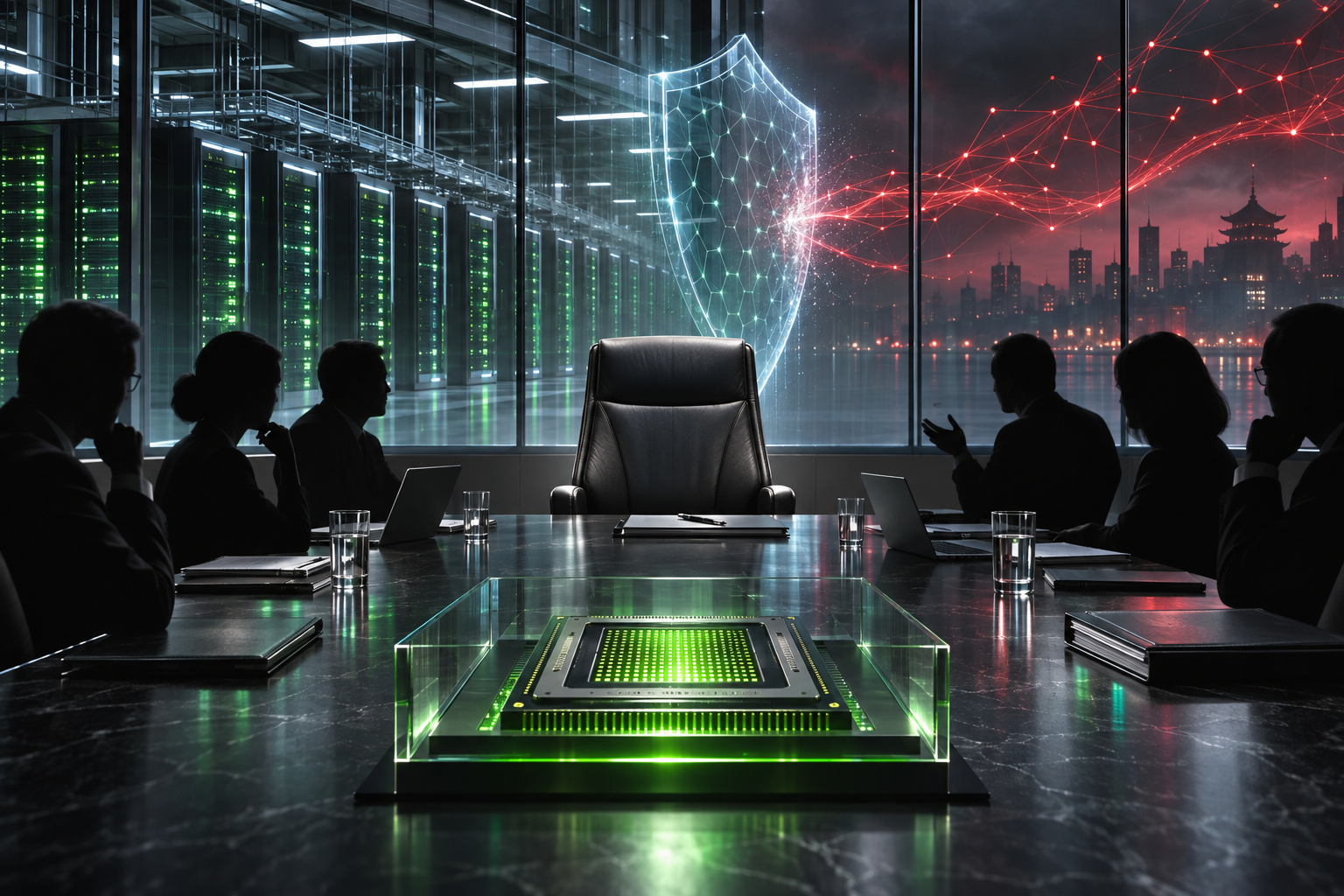
SANTA CLARA, California - Nvidia's board has opened an independent investigation after media reports alleged that founder and chief executive Jensen Huang was targeted by a Chinese foreign-intelligence effort, placing one of the world's most important technology companies under new scrutiny.
The board announced the investigation on Sunday in a brief public statement. It did not identify the investigators, set a timetable or say whether it had found evidence that sensitive company or government information was compromised.
The inquiry follows reporting that alleged Huang had a close personal relationship with a Chinese businesswoman suspected of passing information to Beijing. Huang has acknowledged the personal relationship, according to news reports. The allegation that the woman worked for Chinese intelligence has not been proven in a public proceeding, and there is no public finding that Huang knowingly shared protected information.
Nvidia spokesperson John Rizzo said the development would not slow the company. China has rejected earlier claims around the reported intelligence effort as groundless speculation, according to CBS News.
Top Republican lawmakers had already asked Huang to attend a joint closed-door briefing on November 18. The chairs of the House committees on foreign affairs, intelligence and competition with China sought answers about Nvidia's security procedures and the reported targeting of its chief executive.
The concern extends beyond one executive's private conduct. Nvidia's processors are the essential hardware behind much of the global artificial-intelligence boom, and access to the company's plans, customers, supply constraints and product road map could carry enormous commercial and national-security value.
Washington has imposed export restrictions intended to prevent China's military and intelligence services from obtaining the most advanced AI chips. Nvidia has repeatedly adjusted products and sales plans around those rules while arguing that American companies should be allowed to compete in large overseas markets.
That balance has become increasingly difficult. Nvidia is a private corporation with global customers, but its technology now sits close to the center of American strategic power. Decisions once treated as ordinary product management can influence data-center capacity, military computing and the speed at which rival states develop advanced models.
An independent board investigation is therefore appropriate. It can examine whether company security policies were followed, whether access was properly limited and whether any disclosure obligations were triggered. It must also protect fairness by testing evidence rather than converting headlines into a predetermined verdict.
The most valuable attack surface may be human
Technology companies spend heavily protecting code, networks and fabrication data. Senior executives remain a different kind of vulnerability. They travel widely, meet political and business figures, use personal devices and possess knowledge that may never appear in a single classified document.
Foreign intelligence services do not need a cinematic theft to gain value. A pattern of conversations about product delays, customer demand, export-license strategy or internal disagreement can reveal how a company will act. Even information that seems commercially routine can become strategically useful when combined over time.
China has powerful incentives to understand and overcome American semiconductor controls. Its ruling Communist Party treats technological self-sufficiency as a national objective and maintains a system in which state, corporate and intelligence interests can overlap. That reality justifies serious counterintelligence precautions. It does not justify declaring every Chinese citizen an agent or treating an allegation as proof.
The distinction is important for democratic credibility. Authoritarian systems can investigate behind closed doors and announce a politically convenient conclusion. An American company should do better: preserve evidence, use independent counsel, disclose material findings and allow Huang to respond fully.
Nvidia's board must also confront governance risk. A founder who built extraordinary value may appear indispensable, but no chief executive can be exempt from security rules or oversight. The stronger a leader's influence, the more important independent directors become.
Washington faces its own responsibility. Export controls cannot work if government and industry exchange only general warnings. Agencies should give strategically important companies actionable threat briefings, secure channels for reporting approaches and clear standards for executives who handle sensitive government discussions.
The danger is not limited to Nvidia. AI laboratories, cloud providers, chip-equipment makers and energy companies all hold pieces of the infrastructure shaping the next decade. Their leaders are high-value targets for governments seeking shortcuts to technological power.
The investigation may find serious failures, limited lapses or no compromise at all. Until evidence is released, those possibilities must remain open. What is already clear is that corporate security cannot stop at the data-center door. In a strategic technology race, the people making the decisions are part of the system that must be protected.
Comments
Loading comments…